
At A Glance
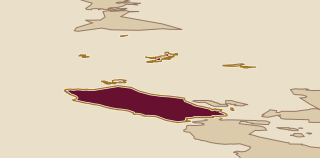
- **Appellation:** Russian River Valley, Sonoma County, California
- **Grapes:** Pinot Noir, Cabernet Sauvignon
- **Range:** Heritage Reserve California tier, Russian River Valley tier
- **Style:** Fruit-forward, site-expressive, oak-supported
The Producer
DeLoach Vineyards makes Pinot Noir from one of California's most exacting appellations and does it with a specific technical argument: that blending eight distinct clones, each ripening at a different point in the season, produces a wine no single-clone programme can match. The Russian River Valley is where that argument lives. The Heritage Reserve tier extends the range to a broader California audience. Together they describe a producer whose work runs through the vineyard, not the cellar.
The oak philosophy says the same thing from a different angle. French barrels from Tonnellerie Chassin, François Frères, and Remond are chosen so that oak marries into the wine rather than becomes the house signature. A Cabernet Sauvignon in the Heritage Reserve range fills out the portfolio with dark fruit and cedar weight, but Pinot Noir is the core.
Place
Russian River Valley sits in western Sonoma County, close enough to the Pacific that morning fog pushes inland most days through the growing season. The fog delays ripening. Temperatures that might push grapes toward overripe fruit in warmer California appellations are held back here, producing Pinot Noir with brighter red fruit than the state average.
The long season is not only a climatic fact. It is the technical foundation for the clone programme. Because the growing window stretches across weeks rather than days, different clones can be harvested at their individual peaks without forcing compromises. Clone 23 reaches its moment before Clone 828. Both come in at full ripeness. The appellation label on the bottle signals that range: Russian River Valley Pinot Noir is a more specific, cooler, more precisely managed wine than a California-labelled bottling.
Soil And Site
Russian River Valley soils vary across the appellation, with cool, fog-influenced conditions concentrated in the western reaches nearest the Petaluma Gap. The marine influence moderates both daytime heat and overnight lows, slowing sugar accumulation and keeping acid levels elevated through harvest. Those conditions suit Pinot Noir's thin skin and sensitivity to heat, and they are the physical reason the appellation attracts producers who want red fruit, acidity, and a long finishing line rather than weight and extraction.
Story
The defining moment in DeLoach's Russian River Valley programme was a blending decision: bringing Clone 23 into the Pinot Noir at a meaningful level for the first time. The winemaking team noticed immediately that it changed the geometry of the wine. Clone 23 spread the mid-palate out horizontally in a way the previous blend had not. That is a physical description with a cause. Clone 23 has a particular aromatic and structural character that opens rather than deepens the palate, and placing it alongside Clone 828, which drives darker fruit and firmer grip, created a more layered architecture across the finish.
The oak sourcing tells a parallel story. Access to Tonnellerie Chassin became available in 2007 and 2008, adding a cooper whose wood behaviour suited the house direction. The principle guiding those choices has stayed consistent: oak should integrate, not announce itself. Vertical tastings of the Russian River Valley Pinot Noir from 2010 through 2022, including a magnum of the 2004 30th Anniversary Cuvée, confirmed that the wine holds across time and that the philosophy compounds with age.
Vineyards And Cellar
The Russian River Valley programme draws from eight Pinot Noir clones: 23, 115, 828, 777, Calera, La Tâche, Mt. Eden, and Swan. Each ripens at a different point in the season. Staggering the picks allows each clone to be harvested at full physiological maturity rather than at a compromise date that suits the average.
Clone 23 contributes horizontal breadth across the mid-palate. Clone 828 brings darker fruit and a tighter, more drawn-out grip. The other clones, which include both the Calera and Mt. Eden selections associated with old-vine California Pinot and the Burgundian La Tâche clone, layer aromatic complexity and textural variation into the final blend.
French oak from Tonnellerie Chassin, François Frères, and Remond is used for ageing. The cooper selection is deliberate. Each barrel house brings slightly different grain and toast character, and the philosophy of integration over signature means the wine's fruit register remains the primary impression on release.
Wines
The Heritage Reserve Pinot Noir is the wider-distribution entry into the range. It carries a California appellation label rather than Russian River Valley, which means the fruit can come from a broader geographic area, and the profile reflects that: warm cranberry opens on the palate, softening into Bing cherry and strawberry, with a touch of spice and light forest floor. Tannins are soft in the mid-palate and firm slightly on the finish. It is a direct, red-fruited Pinot Noir with enough grip to hold food without demanding attention.
The Russian River Valley Pinot Noir is the technically complex bottling. Eight clones, staggered harvest windows, named French cooperage. The palate is broader, the fruit darker toward the finish, and the tannin more structured than the Heritage Reserve. Clone 23 spreads the mid-palate; Clone 828 drives the back end with darker cherry and a tighter finish. These are wines that hold through vertical tastings and develop additional complexity in the bottle.
The Heritage Reserve Cabernet Sauvignon rounds out the range. Dark fruit aromas, mocha on the nose, and a palate of black cherry, cedar, and tobacco place it in the richer, fuller-bodied California Cabernet register. It does not share the delicacy of the Pinot Noir programme and is not intended to.
In The Glass
The Heritage Reserve Pinot Noir opens with cranberry and ripe strawberry, bright and direct. Bing cherry fills the mid-palate with a thread of spice and forest floor underneath. Tannins register softly on the tongue and tighten toward the finish without ever becoming imposing. It is an approachable wine with a clean, red-fruited close.
The Russian River Valley Pinot Noir offers a wider, more layered palate. The nose carries red fruit with darker notes underneath, reflecting the Clone 828 contribution. In the mouth, Clone 23 broadens the middle of the palate, creating a lateral weight that feels different from the vertical depth of a more tannic red. The tannins are finer and more evenly distributed. The finish is longer and continues to develop in the glass. Acidity is present throughout, reflecting the fog-cooled Russian River Valley growing season, and it is what gives the wine its capacity to age.
The Heritage Reserve Cabernet Sauvignon is a different register entirely: mocha and dark fruit on the nose, black cherry and cedar on the palate, with tobacco on the long finish.
A Bottle To Understand It
Start with the Russian River Valley Pinot Noir. It is the wine where every decision DeLoach makes becomes audible: the cool appellation, the staggered clone picks, the integrated French oak. The palate is broader than most California Pinot Noir at this price point, with Clone 23 spreading the mid-palate laterally and Clone 828 adding darker fruit and firmer grip toward the finish. Acidity is real and persistent, a direct consequence of the fog-delayed Russian River Valley season. The oak is present but does not lead. Drink it on release for the red fruit and clone complexity, or hold it to watch the tannins knit and the fruit deepen.
Anecdote
At a tasting of the Russian River Valley Pinot Noir, Clone 23 was given a front seat in the blend for the first time. The winemaking team felt the change immediately. Clone 23 does something specific: it spreads the palate out horizontally rather than driving depth or weight toward the finish. The previous blend had not done that. The clones in the Russian River Valley programme ripen weeks apart, which means harvest is a staggered sequence of separate picks, each parcel arriving in the cellar at a different moment with different aromatic and structural character. Clone 828 had always contributed darker fruit and grip. Clone 23 opened the middle. The blend that came out of that session changed the geometry of the wine, and the Russian River Valley Pinot Noir has been built around that architecture since.
Final Word
DeLoach is a Russian River Valley Pinot Noir producer with a specific technical argument: that eight clones, harvested weeks apart and blended for their individual contributions, make a more complex wine than a simpler programme allows. The Heritage Reserve tier is a clean, accessible entry. The Russian River Valley bottling is where that argument is made in the glass.
Sources
- www.honestwinereviews.com/deloach-pinot-noir
- www.tastingpanelmag.com/deloach-vineyards-reimagines-its-russian-river-pinot-noir-for-its-50th-anniversary
- www.woodswholesalewine.com/products/2024-deloach-vineyards-california-series-heritage-reserve-pinot-noir-california-usa-750ml
- www.saratogawine.com/product/deloach-vineyards-cabernet-sauvignon-heritage-reserve-2022-750ml