
Who makes it
Bodegas Virtus sits on the stretch of Ribera del Duero informally called the Golden Mile, a run of estates in the Duero river valley where vine age and altitude combine to produce some of the appellation's more concentrated old-vine Tempranillo. The bodega is wholly family-owned, built on two traditions that converged when the López de la Osa Escribano family founded it in 1998: a winemaking heritage on one side, and an older tradition of horsemanship on the other.
The winemaker today is Iñigo López de la Osa, who took over in 2012. He came from a different profession entirely. The family's stated winemaking priority is equally direct: the variety and its fruit come first, the ageing process second. In practice, this involves long-established old-vine parcels, French oak chosen for its supporting role rather than its flavour, and two Tempranillo bottlings built to show what vine age and altitude do before oak does anything.
Where it grows
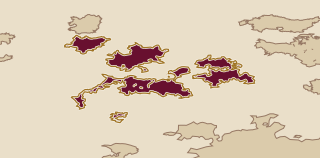
Ribera del Duero is a Denominación de Origen stretching across the Castilian plateau in north-central Spain, following the Duero river through Valladolid, Burgos, Segovia, and Soria provinces. Aldeyuso, where Virtus is based, sits within the Valladolid portion of the appellation. The vineyards here run between 850 and 900 metres above sea level.
That altitude shapes what Tempranillo becomes in the glass. The growing season is long, with warm days and cold nights through summer and autumn, slowing ripening and holding the grape's acidity longer than lower-altitude sites would allow. The wine can reach 14.5% alcohol while keeping a medium-acid line on the palate, the two numbers sitting together more comfortably than they might elsewhere. The Ribera del Duero D.O. label on the bottle confirms both the geographic address and the regulatory framework that governs Tempranillo production here; the Golden Mile location within it signals old vines and premium-tier positioning.
How it is made
The cellar
Virtus works exclusively with old-vine Tempranillo parcels. El Sueco is drawn from vines between 35 and 80 years old; the Gran Reserva selects only vines over 60. The age of the vine matters here because older roots reach deeper into the plateau, produce lower yields, and concentrate flavour into smaller grape clusters, delivering the dark fruit intensity that underpins both wines without requiring heavy extraction.
In the cellar, French oak barrels do the ageing, with the wine held on its lees throughout. El Sueco spends 12 months in barrel with 10% of the malolactic fermentation completed in wood; the softer lactic conversion adds a slight textural roundness without shifting the wine's fruit-forward character. Gran Reserva spends 36 months in the same configuration, but with 33% of malolactic in barrel, building more integration between the oak, the fruit, and the wine's tannin frame over three years of contact.
What they make
El Sueco is the earlier-drinking expression, 100% Tempranillo from parcels carrying vines 35 to 80 years old. Twelve months in French oak on lees, with 10% malolactic in barrel. At 14.5% alcohol with a pH of 3.67 and total acidity of 5.25 g/L, the wine has enough freshness to hold the fruit in place. The colour runs ruby with purple edges, medium-high in intensity. On the nose: dark fruit, licorice, black pepper, wild herbs, and toasted notes from the year in oak. The palate carries dark fruit and fine spice, with silky tannins and a medium-acid line. Drink now or keep three to five years.
El Sueco opens with dark fruit, licorice and black pepper, the oak contributing a toasted note rather than a dominant flavour. On the palate it is immediate: silky tannins, medium acidity, a wave of dark fruit and fine spice that moves cleanly to the finish. The wine has enough freshness to drink without effort now, but the old-vine concentration gives it something to develop over three to five years in a cool cellar.
Wines to try
First bottle
Start with El Sueco 2021. It is 100% Tempranillo from vines between 35 and 80 years old, aged 12 months on lees in French oak with a small proportion of malolactic in barrel. The wine opens on dark fruit, licorice, black pepper and wild herbs, with a toasted note that sits behind the fruit rather than over it. On the palate: silky tannins, medium acidity, dark fruit and fine spice, a clean finish. Fourteen and a half percent alcohol, but the altitude and the old-vine concentration keep the wine from feeling heavy.