
NoleaWorld of Wine

Green Spain (Galicia & Txakoli) · Spain

Producer profile

Bodega Lagar de Condesa

Rías Baixas producer making barrel-fermented Albariño with extended lees aging: apple and pear fruit, mineral honey nose, broad and dense palate, long mineral finish.

Place
Spain
Known for
Barrel-fermented and lees-aged Albariño from Rías Baixas
Wine context
Albariño
Editorial basis
World of Wine editorial profile · 1 source

World of Wine editorial profile · Source list ↓

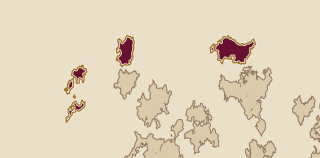
Atlas locationGreen Spain (Galicia & Txakoli) · Spain42.59° N · 8.64° W

At A Glance

Producer: Bodega Lagar de Condesa Region: Rías Baixas, Galicia, Spain Grape: Albariño Style: White, partially barrel-fermented with extended lees aging First Bottle: Lagar da Condesa Albariño

The Producer

Most Rías Baixas Albariño is born in stainless steel, cool and bright, pressed and fermented in tank to preserve the grape's high-acid orchard character. Bodega Lagar de Condesa goes elsewhere. The winery ferments part of its Albariño in French oak barrels of 500 to 600 liters, then keeps the wine on its lees for an extended period before release. The wine is pale gold, broader and denser in the mouth than the appellation's prevailing style, with fruit and mineral depth that carries through a long finish.

The estate sits within the Rías Baixas denominación de origen, Galicia's principal wine appellation and Spain's most productive address for Albariño. The founding Juncal family established the winery between 2007 and 2013. The Gil Family acquired it and released the first commercial vintage in 2013, taking on pergola-trained vineyards suited to Galicia's damp Atlantic climate.

Place

Rías Baixas takes its name from the drowned river estuaries, called rías, that cut into the Galician coast where the Atlantic meets northwestern Spain. The climate is wet, mild, and maritime: Atlantic winds carry humidity and rain across granite slopes, keeping yields in check and acidity naturally high in the grapes. Albariño dominates the appellation completely, and the denomination's wine law is built around it.

Granite underlies most of the vineyard land, and that geology shows in the wine. Rías Baixas Albariño is known for a saline, mineral quality on the finish that comes partly from the soil and partly from the proximity of the sea. The Atlantic also moderates summer heat, so Albariño here ripens with its natural acidity intact, even in warmer years.

The appellation label on a Rías Baixas bottle signals one grape and one style: white wine from Albariño, with bright stone and orchard fruit, high acidity, and a mineral finish. Lagar de Condesa works within that frame, but the barrel fermentation shifts the weight and depth of the wine noticeably.

Soil And Site

Granite is the foundation of Rías Baixas viticulture. It drains well despite the heavy Atlantic rainfall, holds warmth during the day, and contributes a characteristic mineral quality to wines grown on it. The pergola vine training traditional to the region, known as parral, lifts the canopy above ground level to improve air circulation and limit fungal pressure from the coastal humidity. Lagar de Condesa's vineyards use this system, a practical response to a climate where vine disease is a real seasonal risk.

Story

The Juncal family built the winery over roughly six years, from 2007 through to the point of commercial readiness in 2013. That work included replanting or reshaping pergola vineyards adapted to the damp Galician coastal conditions. Before a single bottle reached market, the Gil Family acquired the estate and took on those vineyards and the cellar. The 2013 vintage was the first wine to carry the Lagar da Condesa label commercially.

The decision that most defines the estate is the choice to ferment partially in French oak at a size, 500 to 600 liter barrels, that sits between the large neutral foudres of traditional white-wine regions and the small barriques that dominated oak-aged white wine fashion in the 1990s. Barrels of this scale add more surface contact than a tank but less oak character than a standard 225-liter barrique. In a region where stainless steel is the overwhelming norm, fermenting any part of the wine in wood requires deliberate commitment, and the lees aging that follows keeps the wine in contact with the spent yeast cells long enough to add texture and breadth to the final bottle.

Vineyards And Cellar

The pergola-trained vineyards keep Albariño off the ground and open to Atlantic air, reducing the fungal risk that comes with Galicia's rainfall. The grape responds to these conditions with naturally high acidity and concentrated orchard fruit.

In the cellar, the wine divides between stainless steel and French oak. The barrel portion ferments in 500 to 600 liter barrels, a size that imparts some wood-derived complexity without overwhelming the fruit. After fermentation, the wine rests on its lees: the yeast cells left from fermentation gradually break down and add a creamy, textural quality to the wine. Lees contact also feeds the mineral character that Albariño shows on granite soils, amplifying the length and density of the finish. The combined effect is a wine with more weight on the palate than an all-tank Rías Baixas without losing the grape's fundamental acidity and aromatic clarity.

Wines

The core wine is the Lagar da Condesa Albariño, a single white wine from Rías Baixas built on partial barrel fermentation and extended lees aging. It is pale gold in the glass, a shade deeper than the very pale straw common in tank-only Albariño, and that color is itself a signal of the oak contact in the cellar.

The nose leads with apple and pear, clean and direct, with varietal freshness intact despite the wood. Behind the fruit, a concentrated thread of mineral honey settles in, adding aromatic density without sweetness. The palate carries through on the nose's promise: broad, dense, and acidic, with a full mid-palate that is richer than the appellation average. The finish is long and mineral, with no heaviness. The barrel fermentation adds complexity and body without tipping the wine into oak-driven territory.

Additional labels registered under the estate, including O Fillo da Condesa and Kentia, appear in appellation records but are not detailed in current sourcing. All specific sensory and production detail here applies to the Lagar da Condesa Albariño.

In The Glass

Pale gold, catching light with a slight warmth that signals the barrel time. Apple and pear rise from the glass first, ripe but not heavy, with the clean varietal character Albariño produces reliably on Galician granite. The mineral honey note comes in behind the fruit, concentrated and persistent, not sweet but dense.

In the mouth, the wine is broad from the first sip. The acidity is present and firm, keeping the wine alive and preventing any sense of fatigue across the palate, but it sits inside a fuller frame than most Rías Baixas. Density accumulates through the mid-palate, where the lees aging has built a texture that feels almost creamy against the acidity. Then the finish takes over: long, mineral, with a saline satisfaction that is unmistakably Atlantic. No obvious oak flavor survives into the glass; what the barrels leave behind is richness and depth rather than wood character.

A Bottle To Understand It

The Lagar da Condesa Albariño is the bottle to start with, and there is only one place to start. It is a Rías Baixas white from Albariño, partially fermented in French oak barrels of 500 to 600 liters and aged on lees, and it is the clearest demonstration of what this cellar approach produces. The apple and pear fruit is immediately recognizable as Albariño grown on the Atlantic coast. The mineral honey complexity on the nose is the oak's contribution, quieter than expected and well absorbed. On the palate, the broad, dense, acidic character sets this apart from lighter tank-fermented versions of the same appellation. The long mineral finish is the granite and the sea arriving at the end. Drink it with Galician seafood or anything from the ocean that can match its weight.

Anecdote

When the Gil Family took over Bodega Lagar de Condesa in 2013, the winery the Juncal family had spent six years building was ready to bottle its first commercial vintage but had not yet sold a single case. The Gil Family inherited pergola vineyards shaped for Atlantic Galicia, a cellar equipped for partial barrel fermentation in French oak, and a label with no market history. Rather than reset the cellar approach to the stainless steel norm that defines most Rías Baixas production, they released the Lagar da Condesa Albariño as it was: partially barrel-fermented, lees-aged, and denser in the glass than the appellation average. The first vintage under the Gil name was also the first time any wine from those vineyards reached a buyer. The 2013 bottle carried both the beginning of a new ownership and the entirety of what the previous six years of preparation had built.

Final Word

Lagar de Condesa occupies a small but deliberate corner of Rías Baixas. Where most producers use stainless steel to produce clean, aromatic Albariño, this estate introduces French oak and lees contact to add weight and complexity without abandoning the grape's natural acidity or its mineral Atlantic character. This is a Galician white wine with more to say in the glass than its appellation label might suggest.

Sources

Keep following the thread

Where to go next

mapFind Bodega Lagar de Condesa on the mapKeep the producer, its region and nearby places together.learningUnderstand AlbariñoRead the quick library guide to Albariño, which is listed with this producer.