At A Glance
Appellation: Utiel-Requena, Valencia, Spain Grapes: Bobal, Macabeo, Syrah, Tempranillo, Cabernet Franc Farming: Certified organic Cellar: Gravity flow, temperature-controlled fermentation, oak ageing Flagship: Solo Red (80% Bobal, 20% Syrah) Founded: 2000 (estate); cellar origin 1927
The Producer
Bodega Aranleón is an organic estate on the western edge of the Utiel-Requena appellation, beside the Cabriel river where the plateau sits high enough above the Mediterranean coast to cool the harvests considerably. Paco and Maria Sancho acquired the property in 2000, inheriting a stone cellar that had been built in 1927. They farmed around 300 acres of organic vineyard, built a new facility around the old foundations in 2006, and made their first bottle under the Solo label in 2003.
The estate centres on Bobal, the indigenous red grape of Utiel-Requena, paired with Macabeo for a Cava. Two bottles, one snail logo, one consistent argument: that this inland corner of Valencia produces something distinct from the coastal wines the region is better known for.
Place
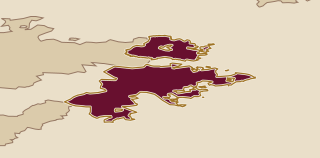
Utiel-Requena is an inland appellation west of the city of Valencia, separated from the coastal D.O. Valencia zone by the mountains of the Iberian system. The plateau sits between 700 and 900 metres. At that altitude, summer days are hot but nights drop sharply, slowing ripening and preserving the natural acidity that would otherwise cook out of the grapes on the coast. The result in the glass is a red with more lift and freshness than the Mediterranean latitude alone would suggest.
Bobal is not grown here as a secondary choice. It is the appellation's defining variety, cultivated for generations as the workhorse red of the Valencian interior. Old bush vines, low yields, and dark fruit with firm acidity are the default character of the grape when it is grown at elevation and handled carefully.
Soil And Site
The estate sits beside the Cabriel river in the western reaches of Utiel-Requena. The riverside position, combined with the altitude of the plateau, creates a diurnal temperature range wide enough to slow accumulation of sugar in the fruit and preserve aromatic compounds through the growing season. Aranleón farms all vineyards to organic certification. No synthetic treatments enter the vineyard.
Story
When the Sanchos took over the property in 2000, the stone cellar from 1927 was still standing. Rather than demolishing it, they built around it. The 2006 expansion was designed with the old cellar at its centre, integrating gravity-flow movement of fruit and juice into the new layout so that pumping over could be reduced. The gravity system shapes everything from grape reception at harvest through to tank transfer and bottling: less mechanical intervention, less heat, less disruption to the fruit.
The same patience applies in the vineyard. Organic certification on a 300-acre estate is a long-term commitment in a warm, dry climate where disease pressure is manageable but where any shortcut removes the certification permanently. The Sanchos did not seek it for marketing reasons alone. The decision preceded any commercial pressure to label the wines green.
Vineyards And Cellar
The estate grows Bobal as its primary red variety across the high-altitude parcels of western Utiel-Requena. Bobal is harvested by hand. The fruit is received at the winery and moved by gravity rather than pump, which reduces physical stress on the grape skins and limits extraction of harsh phenolics before fermentation begins. Fermentation takes place in temperature-controlled vats, giving the cellar control over the pace of extraction and the preservation of primary fruit aromas.
Solo Red is aged in oak after fermentation. The oak softens the natural grip of Bobal tannins without removing the grape's characteristic colour depth and dark fruit. Macabeo for the Solo Cava Brut is handled to preserve freshness: lees ageing in the tank builds texture and a fine, persistent bead.
Wines
The public range is two bottles.
Solo Red is 80% Bobal and 20% Syrah, certified organic, 14% alcohol. Bobal brings the colour, the dark plum and blackberry fruit, and the firm mid-palate weight. Syrah adds a thread of pepper and grip to the finish. Oak ageing smooths the frame without obscuring the grape. The tannins are rounded rather than angular, making the wine approachable young while the underlying fruit depth gives it some ability to develop over three to five years.
Solo Cava Brut is Macabeo-based, made using traditional Cava method with lees ageing. The wine shows pale yellow with vivid green reflections, fine bubbles, and a persistent foam. The palate is dry with integrated acidity, citrus and white blossom on the nose, and a clean mineral finish. It is not a Champagne substitute but it earns its own space: bright, affordable, and produced from organic fruit.
The snail logo ties both bottles visually and signals the founding philosophy: slow, considered work over volume and speed.
In The Glass
Solo Red opens with dark fruit, plum and blackberry at the centre, a suggestion of dried herbs, and a thread of spice from the Syrah component. On the palate, the Bobal grape delivers weight and colour without the astringency that poorly handled examples can produce. The tannins are soft and rounded, the finish is warm and moderately long, and the acidity from the high-altitude fruit keeps the whole thing from feeling heavy. Oak is present but in the background: it shapes the texture without dominating the fruit.
The Cava is a different proposition entirely. Fine persistent bubbles carry citrus zest and white flowers to the nose. The palate is dry, with the acidity from Macabeo keeping the mousse lively and the finish clean. It drinks well as an aperitif and works alongside food without demanding it.
A Bottle To Understand It
Solo Red is the right first bottle. It is Bobal at its clearest: 80% of the grape that defines this appellation, grown organically at altitude, handled by gravity in a cellar that has been here since 1927, and aged in oak just long enough to smooth the edges. The wine is dark, rounded, and soft-tannined, with plum and blackberry fruit and enough freshness from the plateau altitude to keep it from feeling flat. At 14% alcohol it is full without being overwhelming. Start here to understand what Bobal grown in the Valencian interior can produce and what a patient, low-intervention cellar does with it.
Anecdote
When Paco and Maria Sancho made their first vintage in 2003, they needed a label. The name Solo was straightforward enough, but the image required a decision. They chose a snail. Not as an accident or a printer's suggestion, but as a deliberate statement about how they intended to make wine: slowly, methodically, without chasing fashion or volume. The snail appeared on every bottle from the first release and has not been removed since. Visitors to the winery today see it on the Solo Red and the Solo Cava Brut, the same drawing from the same founding choice, on a label that has outlasted several trends in Spanish wine packaging.
Final Word
Bodega Aranleón is a useful address for anyone working through the organic producers of inland Spain. The Bobal grape is underexplored outside its home appellation, the altitude of Utiel-Requena produces freshness that the coastal Valencia D.O. rarely matches, and the Solo label is honest about what it is: a rounded, approachable organic red from a patient cellar built on a foundation that predates its founders by three generations.