
Who makes it
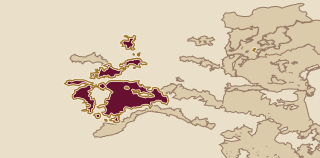
Antica Cascina dei Cinti di Roero is an estate in Vezza d'Alba, on the Roero DOC, the sandy left bank of the Tanaro river in Piemonte. The Tanaro separates Roero from the Langhe hills across the water, where Barolo and Barbaresco have long absorbed most of the attention. On the Roero side, the soils are different, the grape choices are different, and the wines follow accordingly.
The estate sits inside the UNESCO World Heritage core zone that takes in the Langhe, Monferrato and Roero hills together. The range runs from a still white made from Favorita, a grape native to this bank, through a rosé sparkling wine, to a Nebbiolo riserva from the named Vigna Sant'Anna vineyard.
Where it grows
Roero is the left-bank appellation, separated from the Langhe by the Tanaro. Where the Langhe rests on Helvetian limestone and Tortonian marls, Roero sits on sandy soils of marine origin, lighter in texture and more permeable. That difference in ground shows in the grapes: Nebbiolo grown on Roero's sandy soils tends toward brighter acidity and earlier aromatic release than the denser, slower-maturing versions from Serralunga or La Morra across the river.
Favorita, the estate's white anchor, is almost entirely a Roero grape. It has a formal legal home in the Langhe Favorita DOC, which allows the appellation name to appear on the label, but production is concentrated here rather than distributed across Piemonte. The sandy, mineral soils suit the variety's aromatic character, and the cooler fermentation temperatures used at this estate preserve those aromatics further into the bottle.
How it is made
The cellar
Favorita is harvested and pressed softly, with no maceration on the skins. Skin contact would extract phenolic grip and colour and push the wine toward a richer, more textural style; the choice to press directly and keep no skin time is a decision to stay with the grape's natural aromatic lift rather than build body through extraction.
Fermentation runs slowly at 13 to 14 degrees Celsius. Low-temperature fermentation extends the process and captures volatile aroma compounds that faster, warmer fermentation would lose to the atmosphere. The floral and fruit character of Favorita arrives in the glass at higher intensity than a quick ambient-temperature ferment would allow.
What they make
The Langhe Favorita is a pale, floral still white. In the glass it shows straw yellow with greenish highlights, and the nose carries fresh fruit and white summer flowers, the typical aromatic signature of a cold-fermented Favorita with no skin contact. The wine is dry, light-bodied and built around freshness rather than weight.
The Spumante Brut Rosé is a sparkling wine with a brilliant soft pink colour and fine, persistent perlage. The nose opens with an unusual combination: crusty bread alongside cherry and rose. That bread note points toward secondary fermentation or lees contact in the production method. In the mouth the wine is fresh and savoury, with notable acidity that keeps the mousse feeling taut rather than soft.
Wines to try
First bottle
Start with the Langhe Favorita. It is a direct argument for what Roero white wine can be: a native grape, fermented cold with no skin contact, aged in neutral stainless steel for four months, bottled pale and floral. There is no oak character, no phenolic grip, no residual sweetness. What arrives in the glass is Favorita's own aroma profile, preserved by low-temperature fermentation and amplified by the absence of anything that would cover it. The wine is light, dry and immediate, and it explains both the grape and the production approach in a single pour.